
Notes: For the New Face
Posing & Movement
How movement and stillness each serve different kinds of shoots, common posing mistakes, and how to practise it.
In short: How movement and stillness each serve different kinds of shoots, common posing mistakes, and how to actually practise it.
Why a held pose looks wrong on camera
A camera doesn't see the way a mirror does. Where you're positioned, how far the lens is from you, and what focal length is being used all change how your own proportions read in the final image, before your pose even enters the equation. A photographer working close with a wide lens will exaggerate whatever's nearest the camera, while stepping back and using a longer lens compresses the face gently and separates you from the background. None of that is something you control, but understanding that it's happening explains why the same face can look completely different from one photographer to the next, and why simply copying a pose you liked in someone else's photo doesn't always translate the way you expect.
What you do control is your own posture and positioning within that frame, and small, specific adjustments matter more than people expect.
The chin and shoulders specifically
Two habits account for most of the difference between a stiff photo and a natural one, and both come from instinct rather than intention. Tucking the chin down, usually an attempt to look slimmer, does the opposite: it pushes the cheeks and jaw forward, widens the neck, and makes the forehead look larger by comparison. The fix isn't tilting the head up either, it's keeping the chin level or very slightly extended forward, the way a turtle stretches its neck rather than pulling it in. That small adjustment creates separation between the jaw and neck and keeps the face looking structured rather than compressed.
Raising the shoulders is the other automatic habit, usually a nervous response to being in front of a camera. It widens the upper body, pulls focus away from the face entirely, and reads as visible tension in the final image, even when the expression itself looks calm. Letting the shoulders drop and sit naturally back does more for how relaxed and confident a photo looks than almost any other single adjustment.
Metty has written about this in far more depth: Headshot Photography Tips: Why You Shouldn't Tilt Your Chin Down or Raise Your Shoulders.
Reading what the situation actually needs
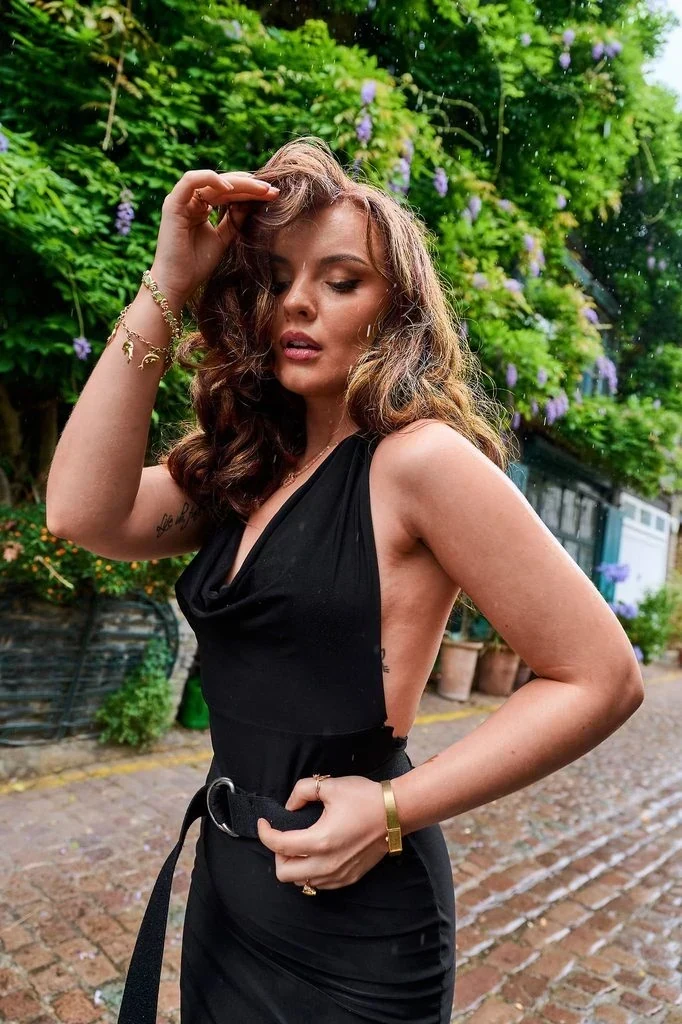
A pose that's been forced into place and held rigidly tends to photograph exactly as it feels: tense, artificial, obviously performed. That's not the same thing as stillness itself being wrong. A lookbook needs exactly that kind of stillness: someone calm and neutral enough that the clothing is what gets seen, working almost like a mannequin rather than a personality pulling focus away from what's being sold. The goal there isn't to look dynamic, it's to hold still enough, and naturally enough, that the clothes do the talking.
Editorial work usually wants the opposite. A lot of the strongest images in that space are caught at the mid-point of something happening rather than a position held for the camera, a turn partway through, weight shifting from one foot to the other, a moment between where you started and where you ended up that nobody could hold still even if they tried. That in-between quality is specifically what movement gives access to. It can't really be posed directly, only arrived at by moving and having a frame taken from somewhere inside that motion.
Neither approach is the more advanced or more correct one. The actual skill is reading which a specific shoot is asking for and switching into it, rather than defaulting to whichever comes more naturally and applying it everywhere. A photographer will usually direct you toward one or the other, but recognising the difference yourself, stillness as the product being sold versus movement as the thing being caught mid-way, means you meet them there faster.
Building general body awareness helps with both. Practising in front of a mirror without trying to look good, just noticing how your weight shifts and how your posture changes as you turn, makes it easier to hold a genuine, un-tense stillness on request, and just as easy to move naturally when that's what's called for instead. The goal isn't memorising positions, it's becoming comfortable enough in your own body that a photographer can direct you either way and you can respond naturally, rather than freezing into whatever was asked.
See the posing examples for a real, visual reference of the range this covers, from held and composed to caught mid-movement.
A Few Questions